How to Spot Truck Driveline Wear Before It Becomes a Breakdown
Driveline problems rarely happen without warning. Learn how to spot common signs of truck driveline wear, including vibrations, noises, leaks, and performance issues, before they lead to costly repairs, downtime, or a roadside breakdown.
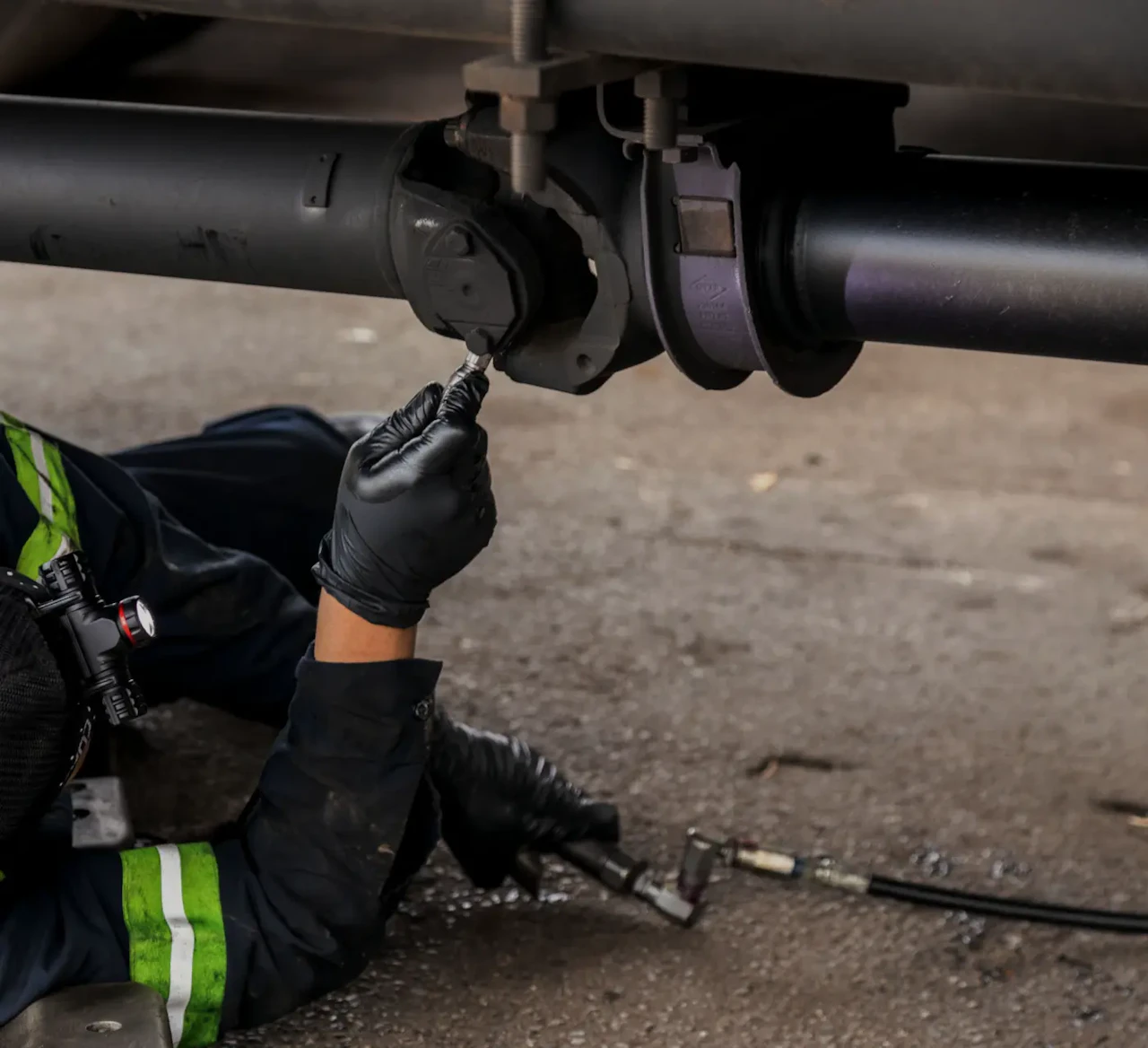
Truck driveline wear often reveals itself through vibrations, clunking noises, fluid leaks, and uneven power delivery long before a breakdown occurs. Identifying these warning signs early allows you to schedule repairs proactively, reduce downtime, prevent costly component failures, and keep your truck operating safely and efficiently.
Why Driveline Maintenance Matters
Ignoring driveline issues can lead to severe consequences. A worn universal joint, damaged driveshaft, or failing differential can quickly escalate into a breakdown that leaves your truck stranded.
Regular inspections and preventive maintenance help:
- Reduce unexpected downtime
- Improve fuel efficiency
- Prevent costly component failures
- Extend vehicle lifespan
- Enhance driver safety
In the trucking industry, downtime costs money. Catching driveline wear early is one of the most effective ways to keep your truck on the road.
Sign 1: Unusual Vibrations While Driving
One of the earliest signs of driveshaft wear is excessive vibration.
If you feel vibrations through the seat, floorboard, or steering wheel—especially at highway speeds—the driveline may be trying to tell you something. Worn universal joints, an imbalanced driveshaft, or damaged driveline components can all create noticeable vibrations.
Pay close attention to the vibration:
- Increases with speed
- Changes during acceleration
- Appears while hauling heavy loads
- Feels stronger under load than when empty
Even minor vibrations should be investigated as soon as possible. What starts as a slight annoyance can eventually result in component failure.
Sign 2: Clunking or Banging Noises
Strange noises are another common warning sign of driveline problems.
A clunking sound when shifting gears, accelerating, or coming to a stop may indicate:
- Worn U-joints
- Excessive driveshaft play
- Loose driveline components
- Differential wear
Many drivers dismiss occasional noises, but metal-on-metal contact typically means a component is already experiencing significant wear. The sooner the issue is diagnosed, the less likely you'll face a major repair bill.
Sign 3: Difficulty Accelerating Smoothly
Your driveline should transfer power smoothly and consistently. If acceleration feels jerky, delayed, or uneven, there may be excessive play within the system.
Common causes include:
- Worn universal joints
- Damaged splines
- Failing differential gears
- Driveshaft alignment issues
These symptoms often worsen gradually, making them easy to overlook. However, any noticeable change in power delivery deserves attention.
Sign 4: Leaking Differential Fluid
Your truck's differential relies on gear oil for lubrication and cooling. Without proper lubrication, internal gears can wear rapidly and generate excessive heat. The differential is a critical driveline component that transfers power from the driveshaft to the wheels.
Watch for:
- Oil spots under the differential housing
- Wet areas around axle seals
- Low fluid levels during inspections
- Burning oil smells
A small leak today can become a catastrophic differential failure tomorrow if ignored.
Sign 5: Excessive Driveline Play
During inspections, technicians often check for excessive movement in driveline components.
Too much play can indicate:
- Worn U-joints
- Loose yokes
- Damaged splines
- Worn carrier bearings
If driveline components move beyond manufacturer specifications, they may no longer transfer torque effectively. This additional stress can accelerate wear throughout the entire system.
Sign 6: Grinding or Whining Sounds
A healthy driveline should operate relatively quietly. Grinding, humming, or whining noises often point to internal wear.
Common sources include:
Worn Differential Gears
As gears wear, improper contact patterns develop, creating whining noises that become more noticeable during acceleration or deceleration.
Failing Bearings
Bearings support rotating driveline components and reduce friction. When bearings wear out, they may produce grinding, growling, or humming sounds. According to driveline fundamentals, bearings are essential for smooth operation, and excessive friction can quickly damage surrounding components.
Driveshaft Issues
An imbalanced or damaged driveshaft can create unusual noises that worsen as speed increases.
Sign 7: Visible Damage During Inspections
Routine visual inspections can reveal problems long before they cause breakdowns.
Look for:
- Rust around U-joint caps
- Missing balance weights
- Damaged driveshaft tubing
- Cracked yokes
- Loose mounting hardware
- Fluid leaks
- Excessive corrosion
Even if your truck seems to drive normally, visible damage often indicates hidden wear inside the component.
Sign 8: Uneven Tire Wear
Many drivers don't realize that driveline issues can contribute to abnormal tire wear.
A damaged differential or axle component may affect how power is distributed across the drive wheels. This can create uneven wear patterns and shorten tire life.
Inspect your tires regularly and investigate unusual wear patterns promptly.
The Role of Preventive Maintenance
The best way to avoid a driveline breakdown is through preventive maintenance. A comprehensive maintenance program should include:
- Regular driveline inspections
- Gear oil checks and replacements
- U-joint inspections
- Driveshaft balancing checks
- Bearing inspections
- Differential servicing
Preventive maintenance is designed to identify potential failures before they become major problems, reducing downtime and extending equipment life.
When Should You Visit a Repair Shop?
Don't wait until your truck becomes undriveable.
Schedule a professional driveline inspection if you notice:
- New vibrations
- Clunking noises
- Fluid leaks
- Grinding sounds
- Handling changes
- Uneven tire wear
Early diagnosis often means simpler repairs and lower costs. For fleets, establishing regular driveline inspection intervals can significantly reduce roadside breakdowns and improve vehicle reliability.
Final Thoughts
Your truck's driveline is one of its hardest-working systems, but it rarely gets attention until something goes wrong. By watching for truck driveline wear symptoms such as vibrations, unusual noises, fluid leaks, and excessive play, you can catch problems before they become costly failures.
Routine inspections and preventive maintenance remain the most effective way to maximize driveline life and keep your truck operating safely. When warning signs appear, addressing them early can save thousands of dollars in repairs and prevent frustrating downtime on the road.
More Articles
.webp)
Towing Challenges for Grain Haulers and Agricultural Fleets in Western Illinois
.webp)
October Engine Checks for Colona Trucks Before Colder Starts Reach the I-80 and I-74 Corridors
%20(1).webp)
End Summer With a DOT Inspection Readiness Check for Your Commercial Fleet
Contact B&B Truck & Trailer Repair
Visit our truck and trailer repair shops in Colona and Galesburg, Illinois, or Waterloo, Iowa. We also offer mobile services throughout the Quad Cities area, including Moline and Rock Island, IL, and Davenport and Bettendorf, IA. Call your nearest location, stop by, or fill out our service request form to get started!
- Mon: 7:00am-4:00pm
- Tues: 7:00am-4:00pm
- Wed: 7:00am-4:00pm
- Thurs: 7:00am-4:00pm
- Fri: 7:00am-4:00pm
- Sat: Closed
- Sun: Closed
- 24/7 Roadside
Assistance
- Mon: 7:00am-4:00pm
- Tues: 7:00am-4:00pm
- Wed: 7:00am-4:00pm
- Thurs: 7:00am-4:00pm
- Fri: 7:00am-4:00pm
- Sat: Closed
- Sun: Closed
- 24/7 Roadside
Assistance
- Mon: 7:00am-4:00pm
- Tues: 7:00am-4:00pm
- Wed: 7:00am-4:00pm
- Thurs: 7:00am-4:00pm
- Fri: 7:00am-4:00pm
- Sat: Closed
- Sun: Closed
- 24/7 Roadside
Assistance


New Location Now Open!
Our newest repair shop is now serving Waterloo, IA!
Come visit us at 2317 Northeast Dr, Waterloo, IA 50703.