How Fleet Diagnostics Can Help Reduce Unplanned Breakdowns Between Galesburg and the Quad Cities
Fleets running between Galesburg and the Quad Cities can’t afford to let small truck problems become roadside failures. Learn how fleet diagnostics can uncover engine, electrical, cooling, boost, and aftertreatment faults before they cause costly downtime.
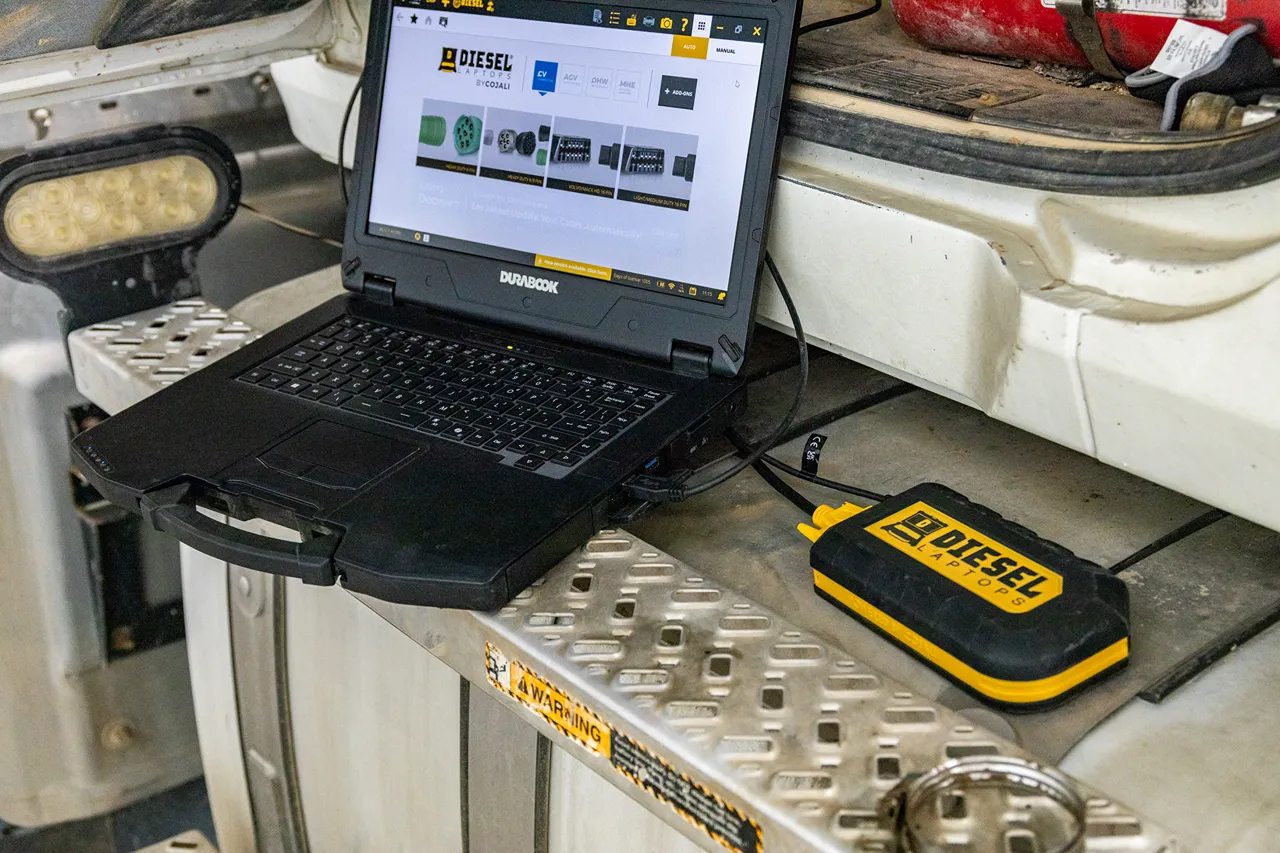
A warning light flickers on halfway down I-74, then disappears before the truck reaches its next stop. Easy to ignore, right? Not necessarily. Intermittent symptoms often give you an early opportunity to identify a developing fault before it turns into an unplanned breakdown.
For fleets moving between Galesburg and the Quad Cities, timely fleet diagnostics can help you find the cause of those warning signs while the truck is still moving, productive, and easier to schedule for repairs.
Why Small Truck Problems Shouldn’t Be Ignored
A truck does not need to be stranded before something is wrong. Occasional hard starting, temporary power loss, unusual temperature readings, and intermittent warning lights can all point toward faults that deserve attention.
That matters when your trucks regularly travel the I-74 corridor between Galesburg and the Quad Cities. A manageable shop visit can quickly become lost driver hours, towing expenses, a missed delivery, and disruption to the next scheduled load if the problem progresses on the highway.
Watch for early symptoms such as:
- Intermittent check-engine or warning lights
- Slow or inconsistent starting
- Reduced power or hesitation under load
- Higher-than-normal coolant temperatures
- Frequent regeneration requests
- Unusual charging-system voltage
- Sporadic sensor or communication codes
- New DEF, DPF or SCR warnings
Not every symptom means a major repair is around the corner. Still, investigating a pattern early gives you more information and more control over what happens next.
What Can Fleet Diagnostics Tell You?
Good diesel diagnostics involve much more than connecting a scanner and reading a trouble code. A code tells a technician where the truck detected an abnormal condition; it does not automatically identify the failed part.
A more complete diagnostic process typically follows a logical path:
- Confirm the driver’s symptoms.
- Scan the truck for stored or active fault codes.
- Review relevant operating information and live data.
- Inspect and test the affected components, wiring or circuits.
- Confirm the actual cause of the fault.
- Complete the appropriate repair and verify operation.
That distinction can save you from replacing parts based on assumptions. A sensor-related code, for example, could involve the sensor itself, its wiring, a connection, or another condition affecting the reading.
How Can Diagnostics Catch Engine and Power-Loss Problems Early?
A truck that feels fine around town may behave very differently once it is pulling hard toward the Quad Cities. Reduced power, hesitation and sluggish acceleration under load can point to problems involving fuel delivery, airflow, boost or engine-management components.
Engine diagnostics give technicians a way to compare the driver’s complaint with fault information and operating data. Instead of guessing at a turbocharger, injector or sensor, they can test the system responsible for the symptom.
Pay particular attention when drivers report:
- Poor acceleration
- Intermittent derates
- Lack of power while loaded
- Hesitation during highway operation
- Repeated engine warning lights
- Symptoms that appear only under higher engine load
For regional freight and manufacturing-support fleets, those small performance changes are worth investigating before the truck has trouble completing its normal Galesburg-to-Quad Cities run.
How Do Cooling-System Diagnostics Help During Summer Operation?
August highway work can expose a cooling system that is already operating close to its limit. Sustained engine load does not automatically cause cooling-system failure, but it can make an existing weakness much easier to notice.
Your truck’s cooling system moves coolant through the engine so it can absorb heat before sending that coolant to the radiator, where the heat dissipates. Components such as the water pump, radiator, coolant, fan, and fan clutch all contribute to controlling engine temperature.
Diagnostic testing can help pinpoint problems involving:
- Abnormal coolant-temperature readings
- Fan or fan-clutch operation
- Temperature-sensor faults
- Coolant leaks
- Thermostat-related concerns
- Overheating that occurs mainly under load
If a truck starts running hotter than usual on I-74, topping off coolant without identifying why the temperature changed may only postpone the problem.
Why Should Fleets Monitor Electrical and Charging Problems?
Electrical complaints can drive fleet managers up the wall because they often come and go. A truck may start normally one morning and crank slowly the next, while a warning light appears only after several hours on the road.
The battery supplies the electrical power needed during starting, while the alternator provides electrical output while the engine runs and recharges the battery. A charging-system problem can therefore affect much more than starting performance.
Electrical diagnostics can include checking system voltage, charging output, wiring integrity, connections and signals from affected components. That helps technicians separate a weak battery from an alternator problem, circuit fault or intermittent sensor issue.
Summer operation can also increase electrical demand through systems such as air conditioning and quickening battery drain. That extra demand may make an already-marginal charging or electrical component easier to detect.
When Should DPF, DEF and SCR Warnings Be Diagnosed?
Aftertreatment warnings deserve attention before they progress to a derate. Modern diesel aftertreatment systems use several components to control emissions, including the diesel particulate filter, SCR system and diesel exhaust fluid.
The DPF captures diesel particulate matter and periodically undergoes regeneration to remove accumulated material. The SCR system uses DEF as part of a chemical process that reduces nitrogen oxides in the exhaust stream.
Trouble can develop when sensors, regeneration processes, or related components stop operating as expected. Drivers may notice:
- DPF warning lights
- Repeated or unsuccessful regeneration requests
- DEF or SCR warnings
- Exhaust-temperature sensor faults
- NOx-related codes
- Reduced engine power or derates
If your trucks regularly run between Galesburg and Moline, East Moline, or other Quad Cities destinations, diagnosing repeated warnings before the vehicle derates can help you avoid turning a scheduled delivery into a roadside event.
Why Isn’t Reading a Fault Code the Same as Diagnosing the Truck?
Here’s where many repair decisions go sideways: the component mentioned in a code description is not automatically the component that needs replacement.
A code is evidence. Truck diagnostics use that evidence alongside the truck’s symptoms, system behaviour, and component or circuit testing to find the actual failure.
Consider an intermittent sensor fault. Replacing the sensor immediately might seem logical, but damaged wiring, poor voltage, or a loose connection could create a similar symptom. Testing first helps you spend repair dollars on the cause rather than the clue.
That approach is particularly valuable for fleets with multiple trucks. Guessing at parts across several units gets expensive fast.
How Can Diagnostics Become Part of Preventive Maintenance?
Diagnostics provide the most value when you use them before a truck stops moving. That makes them a natural extension of a strong preventive maintenance program.
Preventive maintenance, including regular fluid checks, brake inspections and other scheduled maintenance, can reduce the risk of downtime, while diagnostics give you another tool when drivers or technicians notice something outside the truck’s normal behaviour.
Ask drivers to report changes early rather than waiting for a warning light to stay on permanently. For fleets serving Galesburg, Colona and the wider Quad Cities freight network, those observations can give your maintenance team a head start.
Summer traffic, I-74 roadwork and tight delivery windows can already complicate regional routes. An avoidable mechanical failure only adds another variable.
Keep Small Problems From Becoming Roadside Problems
You cannot predict or prevent every breakdown. You can, however, investigate warning signs while you still have the option to schedule the truck instead of reacting after it is stranded.
Fleet diagnostics help you turn vague symptoms, fault codes and operating changes into better repair decisions. For trucks working the I-74 corridor between Galesburg and the Quad Cities, catching a developing engine, electrical, cooling, or aftertreatment fault early may mean the difference between planned maintenance and an expensive interruption.
Schedule Fleet Diagnostics With B and B Truck and Trailer Repair
If one of your trucks is showing warning lights, losing power, running hotter than normal, or developing intermittent electrical or aftertreatment problems, don’t wait for the issue to become a roadside failure.
Contact our team at B and B Truck and Trailer Repair to schedule fleet diagnostics and get the problem properly investigated before your next run through Galesburg and the Quad Cities.
Frequently Asked Questions About Fleet Diagnostics
What is included in heavy-duty truck diagnostics?
Heavy-duty truck diagnostics can involve checking fault codes, reviewing operating data, and testing components, wiring, or circuits related to the reported symptom. The goal is to identify the actual cause of the problem rather than replacing a part based only on a code.
Can diagnostics prevent every truck breakdown?
No. Diagnostics cannot predict every mechanical failure. They can, however, identify some developing faults when a truck begins showing symptoms such as warning lights, unusual temperatures, starting problems, derates, or inconsistent power.
Should a truck be diagnosed if the warning light turns off?
Yes, especially if the warning light has appeared more than once or the driver noticed another symptom. Intermittent faults can leave stored information that may help a technician determine what caused the warning.
What can cause a diesel truck to lose power under load?
Power loss can involve several systems, including fuel delivery, turbocharger or boost performance, airflow, sensors, and engine-management controls. Proper diesel diagnostics help narrow down the cause before parts are replaced.
When should a fleet investigate DPF or DEF warnings?
A fleet should investigate repeated DPF problems, regeneration issues, DEF warnings, or aftertreatment-related derates as soon as practical. Early diagnosis can help identify the underlying fault before it creates a larger operational problem.
More Articles
.webp)
The I-80 Driver’s Guide to Breakdowns, Mobile Repairs, and Towing in the Quad Cities
%20(1).webp)
How to Build a Preventive Maintenance Schedule Around Galesburg–Davenport Delivery Cycles
.webp)
Get Your Commercial Truck Ready For Harvest Season in Western Illinois
Contact B&B Truck & Trailer Repair
Visit our truck and trailer repair shops in Colona and Galesburg, Illinois, or Waterloo, Iowa. We also offer mobile services throughout the Quad Cities area, including Moline and Rock Island, IL, and Davenport and Bettendorf, IA. Call your nearest location, stop by, or fill out our service request form to get started!
- Mon: 7:00am-4:00pm
- Tues: 7:00am-4:00pm
- Wed: 7:00am-4:00pm
- Thurs: 7:00am-4:00pm
- Fri: 7:00am-4:00pm
- Sat: Closed
- Sun: Closed
- 24/7 Roadside
Assistance
- Mon: 7:00am-4:00pm
- Tues: 7:00am-4:00pm
- Wed: 7:00am-4:00pm
- Thurs: 7:00am-4:00pm
- Fri: 7:00am-4:00pm
- Sat: Closed
- Sun: Closed
- 24/7 Roadside
Assistance
- Mon: 7:00am-4:00pm
- Tues: 7:00am-4:00pm
- Wed: 7:00am-4:00pm
- Thurs: 7:00am-4:00pm
- Fri: 7:00am-4:00pm
- Sat: Closed
- Sun: Closed
- 24/7 Roadside
Assistance


New Location Now Open!
Our newest repair shop is now serving Waterloo, IA!
Come visit us at 2317 Northeast Dr, Waterloo, IA 50703.